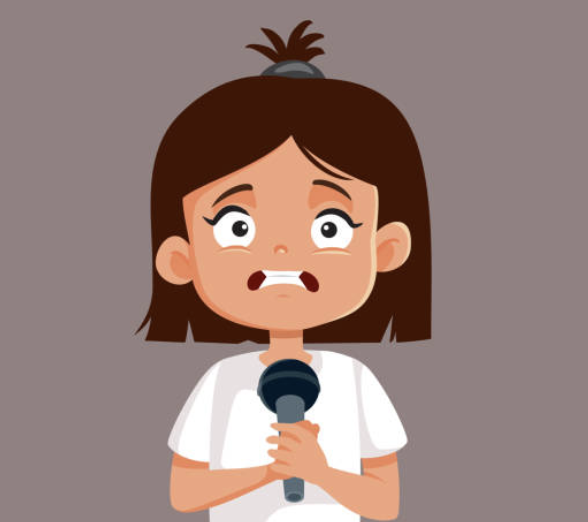
When I went to uni, I remember hating singing in the Queensland Conservatorium Theatre. I was told by several people that it had ‘some of the best acoustics of any venue in Australia’, but that didn’t change my mind. I performed multiple operas, recitals and auditions there and I always felt that I’d sung less than my best. And it wasn’t just me: my teacher’s feedback would often be that I was pushing my intonation sharp.
Why did this venue suddenly make me lose power and resonance in my voice?
I learned what was going on only a few years ago: a little thing called biofeedback.
In this context, biofeedback is the information we get as we sing; we hear what our voice sounds like and we feel what our body is doing. We can adjust what we are doing according to this biofeedback. Of course, how we sound is going to depend on the space we are singing into. If we are accustomed to singing in a particular room – and as a result, a particular biofeedback – a change to those factors and the resulting feedback can really throw us off.
I was so used to singing in my little space at home or in my teacher’s studio that when I got into that larger space, it sent my voice straight out to the audience (a result of good acoustic design, I guess ), and my biofeedback was changed dramatically. To my ears, my voice sounded soft and weak. I didn’t think I was filling the space, so I worked harder, and inevitably exhausted myself; I never sounded my best.
So, what can we do to avoid “sounding worse” in different spaces?
- Regularly mix up where we practice – sing in different rooms in your house, even the dry rooms that give you nothing back. Sing outside occasionally, too!
- Sing with a microphone and without a microphone. If you use In Ear Monitors, practice with and without them.
- If you get the opportunity before a performance, walk around the space and have a quick sing to get an idea of how you’ll sound to yourself.
Working in this way will help you develop other types of awareness eg. what your body feels like and what it is doing, so your don’t rely as heavily on what you sound like to your own ears. This will stop that panic of ‘Oh no! I sound so different to what I sounded like this morning at home!’

Leave a Reply